Patio installation in Buffalo, NY should be planned in fall or early winter, even though installation itself happens in spring or summer. This timing secures your spot in the installation schedule and gives enough lead time to choose materials that hold up to Buffalo’s freeze-thaw cycles, so the patio is ready for use as soon as warm weather arrives.
Most homeowners think about patios in June, when they’re already sitting on a bare backyard wishing they had somewhere to put a table and chairs. By then, you’re behind. Ashton Services designs and installs patios across Buffalo, Grand Island, and East Aurora, and the patios that go in smoothly every spring are almost always the ones where planning started the fall before — not the ones squeezed into a homeowner’s schedule the same week they decided they wanted one.
Why Patio Timing Works Differently in Buffalo Than Warmer Climates
In a lot of the country, a patio is a project you decide on and complete within the same season. In Western New York, that’s rarely realistic, for two reasons.
- Installation windows are shorter. Excavation and base preparation need workable, unfrozen ground, which limits the realistic install season to roughly April through October. Waiting until summer to even start planning means competing for a shrinking number of remaining slots.
- Freeze-thaw cycles punish a rushed base. A patio’s long-term durability depends almost entirely on what’s underneath it a properly compacted gravel base set below the frost line. Rushing this step to squeeze a project into a tight summer schedule is one of the most common reasons a patio heaves or cracks within a few winters.
Planning in fall, even for a patio that won’t be built until spring, means the design, material selection, and scheduling are settled before the spring rush and the crew doing the work isn’t racing weather to get the base right.
What Goes Into a Buffalo Patio That Actually Lasts
A patio that survives WNY winters comes down to three layers of decisions, not just the pavers on top.
- Base depth and compaction. A compacted gravel base extending below the frost line is what actually prevents heaving. This is invisible once the project is finished, but it’s the single biggest factor in whether the patio still looks good in five years.
- Material choice. Some paving materials handle repeated freezing and thawing better than others (more on this below).
- Drainage away from the patio surface. A patio built without a slight slope for water runoff will hold water, and standing water that freezes on a patio surface becomes both a safety hazard and a long-term cracking risk.
Skipping any of these to save time or cost tends to show up as a problem within one or two winters, not immediately — which is exactly why base preparation is worth asking a contractor about directly before signing a contract.
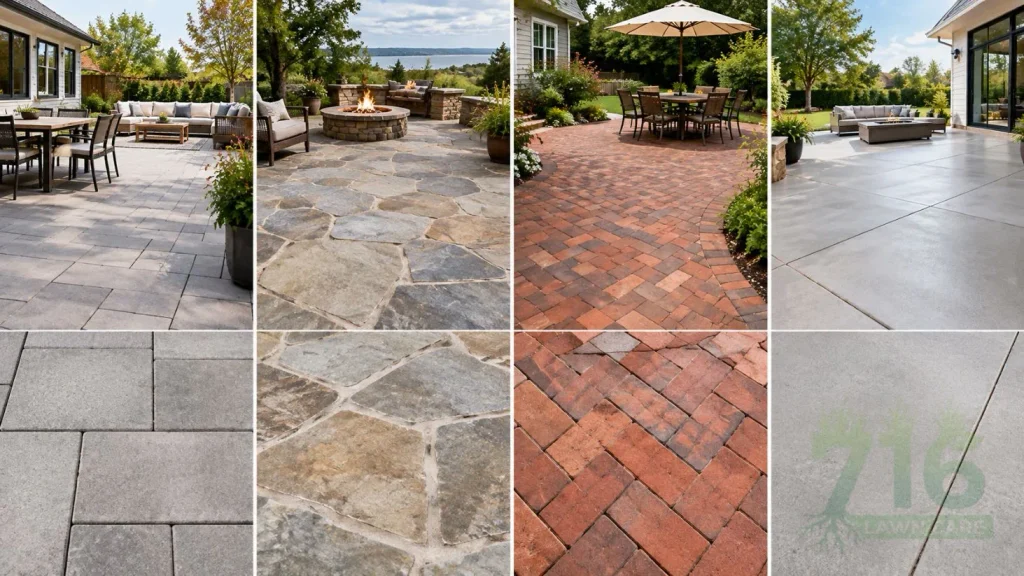
Patio Materials: How They Hold Up to Buffalo Winters
| Material | Freeze-thaw durability | Typical look | Maintenance |
|---|---|---|---|
| Concrete pavers | Good, especially with proper base | Wide range of colors/patterns | Low; occasional joint sand refresh |
| Natural stone (flagstone, bluestone) | Very good | High-end, natural aesthetic | Moderate; sealing recommended |
| Poured concrete (stamped or plain) | Moderate — prone to cracking without control joints | Uniform, modern | Low, but cracks are harder to repair invisibly |
| Brick pavers | Good | Traditional, classic look | Low to moderate |
| Gravel/loose stone | Very good (flexible, doesn’t crack) | Casual, informal | Higher; needs periodic refilling and weeding |
Concrete and brick pavers tend to be the most forgiving choice in this climate because individual pavers can shift slightly with freeze-thaw movement without cracking, unlike a single poured concrete slab. If you want the durability of pavers but a more uniform, upscale look, natural stone is the higher-cost option that also performs well here.
Designing Your Patio as an Extension of Your Home
A patio works best when it’s designed around how you’ll actually use it, not just as a flat rectangle of pavers.
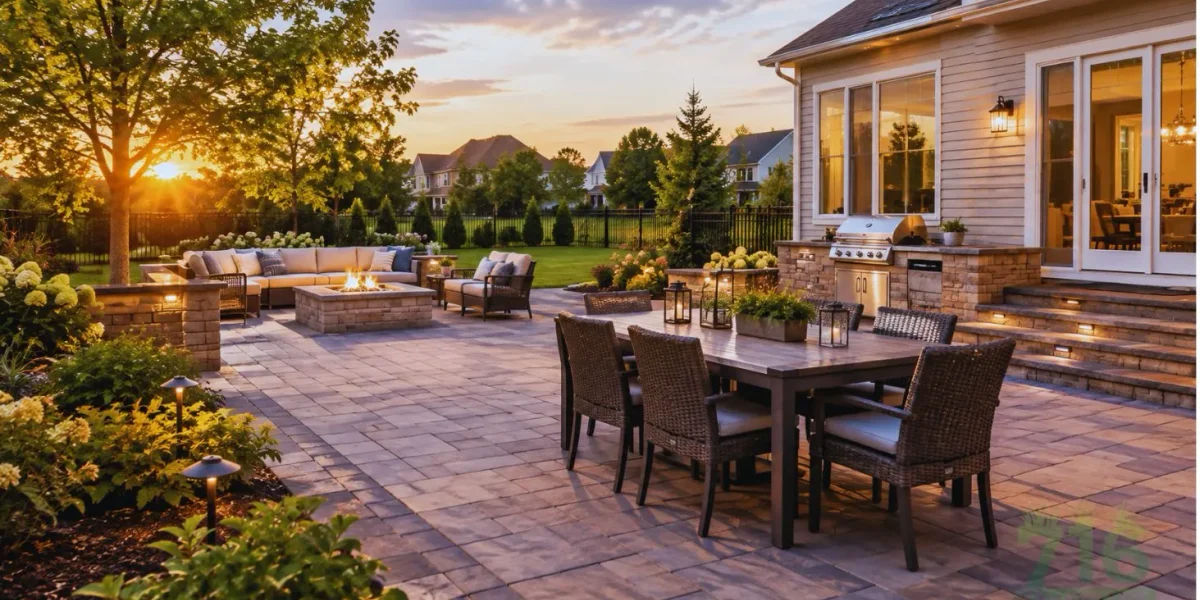
- Define zones within the space. Separating a dining area from a lounge or fire feature area, even with something as simple as a change in paver pattern, makes a single patio feel like more usable square footage.
- Plan for shoulder-season use. A fire pit installation extends how many months a Buffalo patio actually gets used — a well-placed fire feature can stretch outdoor evenings well into October, which matters a lot in a climate where warm-weather months are limited.
- Consider shade and structure. A pergola or cabana adds shade for sunny afternoons and can make a patio usable even during a light rain, which effectively adds more usable days per year to the space.
- Match the patio size to how you’ll use it. A patio meant for occasional small gatherings needs less square footage than one meant to host a full outdoor dining and lounge setup — sizing it around your actual use avoids paying for space that goes unused.
Patio Installation Timeline: What to Expect
Understanding the realistic timeline helps explain why fall planning matters.
- Design consultation and material selection (fall/winter): Site assessment, design planning, and material choices are finalized during this window, well ahead of the installation season.
- Scheduling (winter): Your installation date is locked in based on the spring/summer schedule, which fills up faster than most homeowners expect.
- Excavation and base preparation (once ground is workable, typically April onward): This is the step that determines long-term durability and cannot be rushed.
- Paver or material installation (following base prep): The visible part of the project, usually completed within a few days to a couple of weeks depending on patio size and complexity.
- Finishing details (joint sand, sealing if applicable, edge restraints): Final steps that lock the patio surface in place.
Homeowners who start this process in June are often trying to compress steps 1 through 3 into a much shorter window, which increases the odds of a rushed base or a delayed project pushed into the following year.
DIY vs. Professional Patio Installation
Reasonable to DIY:
- A very small paver patio (under roughly 100 square feet) with simple, flat ground and no drainage concerns
- Gravel or loose-stone patios, which are more forgiving of minor base imperfections
- Adding furniture, planters, or string lighting to an existing patio
Worth hiring a professional for:
- Any patio requiring excavation and a compacted base below frost depth
- Patios larger than a small DIY-sized project, where base consistency across a bigger area is harder to get right without equipment
- Any patio with drainage considerations, slope changes, or proximity to a structure
- Natural stone or stamped concrete installations, which require more specialized skill to install correctly
If your project is a small, flat gravel seating area, DIY is a genuinely reasonable option. Anything involving real excavation, a paver base, or drainage planning is where a rushed or incorrect DIY attempt tends to become an expensive redo within a couple of winters.
Local Notes: Grand Island, East Aurora, Orchard Park
Site conditions vary enough across these communities to affect patio planning:
- Grand Island properties, being surrounded by water, can have higher groundwater levels in some areas, which makes proper drainage planning beneath and around a patio especially important.
- East Aurora has more properties with mature landscaping and established trees, which can affect both root considerations during excavation and how much shade a patio site gets throughout the day.
- Orchard Park often has more naturally sloped lots, which may require additional grading or a retaining element alongside patio installation to create a level surface.
Ashton Services designs and installs patios across all three of these communities, adjusting base depth, drainage, and material recommendations to each property’s specific site conditions.
Pairing a New Patio With the Rest of Your Yard
A new patio is often the anchor for a broader outdoor living plan. If your yard needs upkeep support to look its best around a new patio, our Landscaping Maintenance post and earlier posts on Low Maintenance Landscaping and Retaining Wall Installation cover related design and upkeep decisions worth considering alongside a patio project, especially if your lot has slope or drainage factors that could affect where the patio goes.
Plan Now, Enjoy It This Spring
The patios that get built and enjoyed by early summer are the ones where the planning started the fall before. Schedule a patio design consultation with Ashton Services now, and consider adding a fire pit or pergola to extend how much of the year your new outdoor space actually gets used.
FAQ
When should I start planning a patio installation in Buffalo, NY?
Fall or early winter is the ideal time to start planning, even though installation typically happens in spring or summer. This timing secures an earlier installation slot and allows enough lead time for design and material decisions before the busy season fills up.
What is the best patio material for Buffalo’s climate?
Concrete or brick pavers tend to perform best in Buffalo’s freeze-thaw climate because individual pavers can shift slightly without cracking, unlike a single poured concrete slab. Natural stone is a higher-cost option that also holds up very well.
How long does patio installation take in Buffalo, NY?
Once the ground is workable in spring, installation itself usually takes a few days to a couple of weeks depending on patio size and complexity, though base preparation and material selection often begin months earlier during the planning phase.
Why does patio base preparation matter more in Buffalo than in warmer climates?
Buffalo’s freeze-thaw cycles put repeated pressure on anything installed without a properly compacted base set below the frost line. Skipping this step is one of the most common reasons a patio heaves or cracks within a few winters.
Can I install a patio myself?
Small, simple patios under roughly 100 square feet with flat ground and no drainage concerns can be reasonable DIY projects. Larger patios, or any project requiring excavation, a compacted base, or drainage planning, are better handled by a professional installer.
Should I add a fire pit or pergola to my patio?
Both extend how many months a patio actually gets used — a fire pit adds warmth for cooler evenings, while a pergola adds shade and light rain coverage. Whether either makes sense depends on how you plan to use the space and your budget for the overall project.
Need Professional Landscape or Tree Care in Buffalo, NY?
Ashton Services delivers premier lawn care, tree removal, seasonal cleanups, and hardscaping tailored to your property.